
First Week with a New Puppy: The Honest Survival Guide
Hour-by-hour reality of bringing home a Golden Retriever puppy. The chaos, the puppy blues, and what actually helped.
Jaap Stronks
First Week with a New Puppy: The Honest Survival Guide
Quick answer: Your first week with a puppy will be nothing like you planned. You’ll sleep less than you did with a newborn baby, clean up more messes than you thought possible, and question every life choice that led you here. You’ll also experience moments of such pure joy that none of it matters. Here’s what actually happens, hour by hour, day by day.
The Lie We All Believe
I spent months preparing. I read four books on puppy raising. I had a crate, enzyme cleaner, three different types of treats, a training schedule printed and laminated (laminated!), and a color-coded spreadsheet for tracking everything.
I was ready.
I was not ready.
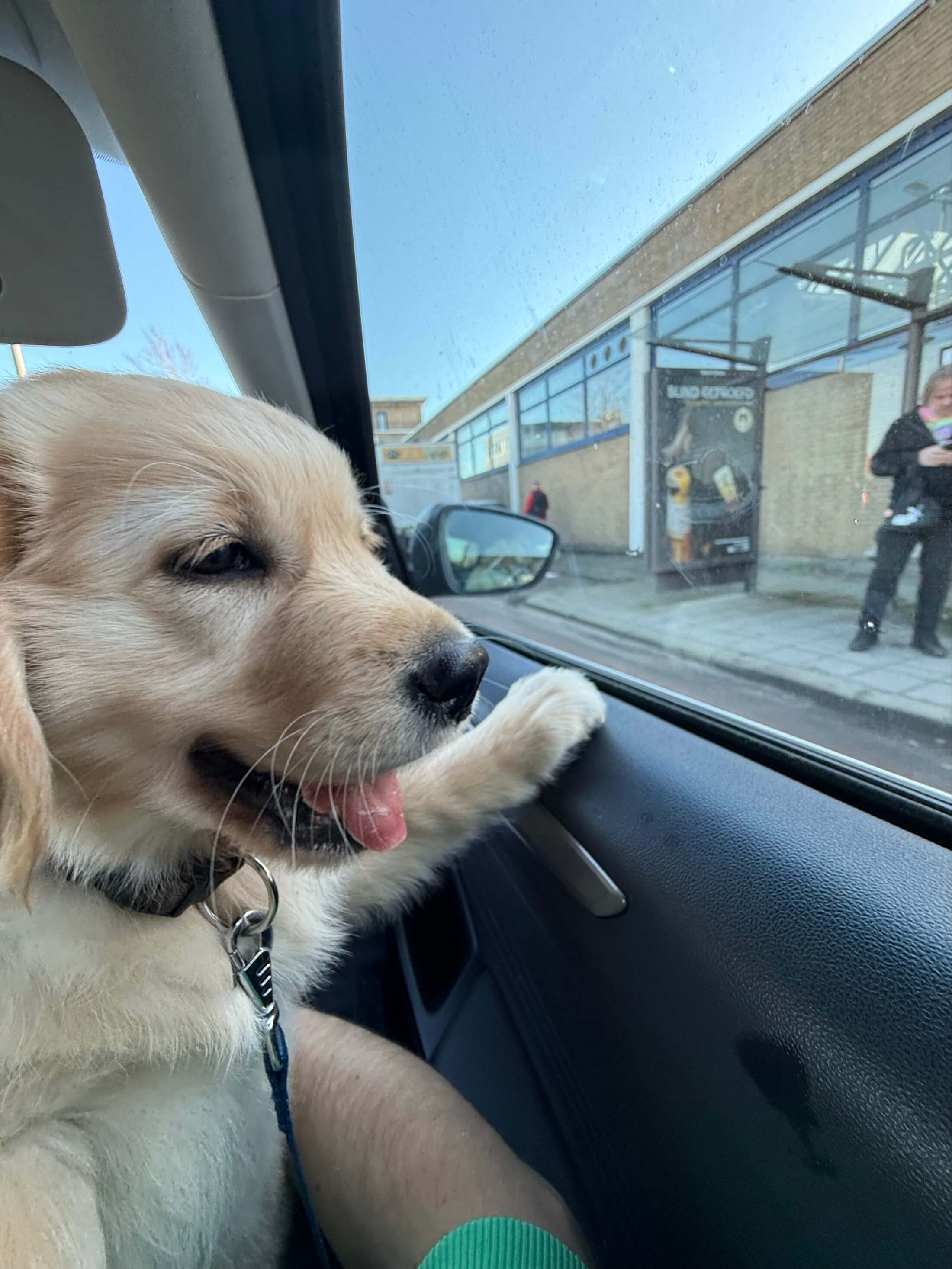
On February 14th, 2026, at 2:41 PM, I picked up Ollie — an 8-week-old Golden Retriever — from the breeder. He sat on my lap during the car ride home, calm as a Buddhist monk. I took a photo. He looked perfect. I felt perfect.
By 8 PM, I’d cleaned up four puddles and a poop, he’d cried at the crate, ignored the expensive chew toy, and tried to eat a power cable. My laminated schedule was already irrelevant.
This is the guide I wish someone had given me. Not the Instagram version. The real one.
Day 1: The Homecoming (aka “What Have We Done”)
What I Expected
A smooth transition. Show puppy the house, show puppy the crate, show puppy the garden. Puppy naps while I make dinner. Easy.
What Actually Happened
2:41 PM — Picked up Ollie from the breeder. Car ride home was genuinely perfect. He slept on my lap the entire time. Peak delusion.
3:00 PM — Arrived home. Ollie explored cautiously. Sniffed everything. Seemed calm. I thought: “We got a chill puppy!”
4:00 PM — First indoor accident. On the rug, obviously. Not the washable floor two feet away. The rug. I laughed it off. “First day jitters!”
5:00 PM — Second accident. On the same rug. Less laughing.
6:00 PM — Third accident. Different rug. Cool.
6:30 PM — Fourth accident. This time I caught the sniff-and-circle precursor. Grabbed him mid-squat and sprinted to the garden. He finished outside! I celebrated like we’d won the World Cup.
7:00 PM — First meal at home. He ate 80g of kibble soaked in milk (breeder’s recommendation). Seemed happy. I started to relax.
8:00 PM — Fifth accident. Post-meal, of course. The books all said “take them out after eating.” Did I? No. I was eating my dinner.
11:00 PM — Late-night snack per breeder’s schedule. Into the crate beside the couch.
11:30 PM — Crying. So much crying. I reached through the crate bars and petted him every 10 minutes until about 2 AM. Then he suddenly… settled. Slept until 5 AM.
Day 1 Score
- Indoor accidents: 5
- Outdoor successes: 0 (technically 1 half-success)
- Human tears: 0 (but close)
- Hours of sleep: ~3
What I Learned
Nothing goes according to plan on Day 1. That’s fine. Your only job is: keep them safe, feed them, let them sleep, and survive until tomorrow.
Day 2: The Learning Curve (Yours, Not Theirs)
What Actually Happened
5:00 AM — Ollie woke up. I stumbled out of bed, shoes already by the door (learned that from Day 1), straight to the garden. He peed outside. I whisper-shouted “GOOD BOY” so I wouldn’t wake the neighbors. First outdoor success! It felt like winning the lottery.
5:05 AM — It was snowing. February in Rotterdam. There I was, in my pajamas and winter coat, standing in the snow, watching a puppy sniff every frozen leaf.
6:00 AM — First walk of the day, following the breeder’s schedule. 8 minutes around the block. Ollie walked like a drunk — zigzagging, stopping randomly, sitting down in the middle of the sidewalk.
8:00 AM — Breakfast. Took him out 10 minutes later. He peed outside! I was getting the hang of this.
11:00 AM — Indoor accident. I’d been in a meeting (working from home) and lost track of time. Lesson: your schedule now revolves around a tiny bladder.
1:00 PM — Indoor poop. But — he had whimpered and gone to the door first. Signal recognition! The books said this would take weeks. He was trying to tell me, I just wasn’t fast enough.
3:00 PM — First training session! Practiced “sit” with treats. He got it within 3 minutes. Golden Retrievers and food: a love story.
6:02 PM — First snow experience during the evening walk! He was absolutely delighted. Biting snowflakes, bounding through the white stuff. Pure magic moment.
9:15 PM — Met Ozzy, a neighbor’s dog, during the evening walk in the snow. First dog-to-dog interaction! They sniffed each other cautiously. My heart exploded.
11:55 PM — He woke up restless and threw up a tiny bit. I panicked. Took him outside. Turned out he needed to poop, which he did outside (!). False alarm on the vomiting — just an upset tummy from the transition.
Day 2 Score
- Indoor accidents: 3
- Outdoor successes: 7
- Human confidence: cautiously rising
- Hours of sleep: ~5
What I Learned
Day 2 is when you start to see the rhythm. Sleep, eat, potty, play, sleep. That’s the loop. Every waking moment is an opportunity for an accident AND an opportunity for a success. Start watching for their signals.
Day 3: The Exhaustion Sets In
The highlight: Morning routine was smooth. Outside immediately after wake-up at 6:59 AM. Peed AND pooped outside. Breakfast, then he played with his rubber duck toy while I had coffee. For 15 beautiful minutes, life felt normal.
The lowlight: Four indoor accidents. Four! Day 3 was somehow worse than Day 2. I didn’t understand. What happened to the progress?
Here’s what happened: I got confident and stopped watching as closely. Every single accident on Day 3 happened when I was distracted — cooking, on my phone, in the bathroom. The moment I took my eyes off him, puddle.
The emotional moment: At 8:25 PM, I sat on the kitchen floor cleaning up the fourth accident. Ollie came over and curled up in my lap while I was literally holding paper towels soaked in pee. He fell asleep against my chest. I went from frustrated to melted in about 4 seconds.
That’s the puppyhood emotional rollercoaster. Fury to love in 4 seconds. Get used to it.
Sleep data: This was also the night I realized Ollie’s overnight capacity was growing fast. He slept from 00:15 to 04:30 — a 4-hour-15-minute stretch. Two nights in, and already improving. Crate for the win.
Day 3 Score
- Indoor accidents: 4 (regression!)
- Outdoor successes: 8
- Emotional breakdowns: 1 (brief, cleaned up with enzyme spray)
- Hours of sleep: ~5.5
Day 4: The First Breakthrough
Something shifted on Day 4. Not in Ollie — in me.
I stopped trying to follow the laminated schedule and started following Ollie. I tracked when he actually slept, actually ate, actually needed to go. And I moved fast. Every nap ending = shoes on, outside, immediately. No “let me just finish this…”
Result: 1 indoor accident the entire day. Seven successful outdoor trips. The one accident happened right after I brought him inside from the garden where he hadn’t peed (the classic “fake garden visit” trap).
Big moment: Ollie slept from 23:25 to 04:30 — over 5 hours overnight. He was 8 weeks and 3 days old. I started to believe we’d survive this.
Another big moment: First play session at the local dog field! He ran around with the energy of a puppy who’d discovered running was a thing. Came home and crashed for 2 hours in the crate.
Day 4 Score
- Indoor accidents: 1
- Outdoor successes: 7
- Tail wags that made everything worth it: approximately 400
- Hours of sleep: 6.5
Day 5: The Vet Curveball
Ollie’s first vet visit. Everything went great medically — healthy pup, 7.5 kg, no concerns.
But the disruption destroyed our fragile routine. Different environment, different timing, car ride, waiting room, strange smells. Ollie fell asleep in the vet’s waiting room (adorable) but his whole schedule was off for the rest of the day.
Result: 5 indoor accidents. Right back to Day 1 numbers.
If this happens to you — and it will — remember: disruption days are not regression days. Your puppy didn’t forget. Their routine just got scrambled. Get back on schedule tomorrow and the numbers will recover.
Overnight save: Despite the chaotic day, Ollie slept from 23:05 to 06:45. Almost 8 hours. At this point, nighttime was basically solved. It was daytime that remained the battleground.
Day 5 Score
- Indoor accidents: 5 (vet disruption)
- Outdoor successes: 6
- Vet bill: noted
- Overnight: slept nearly 8 hours!
Day 6: Recovery and Rhythm
Back to our routine. 4 inside, 9 outside. Not perfect, but the morning was flawless and the accidents all clustered in the afternoon/evening when energy was low (mine and his).
Key discovery: I noticed that almost every accident happened in the 6-10 PM window. Ollie was overtired by evening — more accidents, more biting, more chaos. The solution was more enforced naps (crate time) in the afternoon.
Beautiful moment: Ollie met the neighbor’s dog Sasha during the morning walk. Gentle sniffing, play bows, tiny Golden retriever attempting to wrestle a dog three times his size. The socialization window is real, and these early positive experiences are gold.
Day 7: One Week Down
I couldn’t believe it had only been a week. It felt like a month. Also, somehow, it felt like Ollie had always been here.
Day 7 numbers: 3 inside, 11 outside. But more importantly — the indoor accidents were all “my fault” (slow reaction) rather than Ollie having no idea. He was trying. I could see him sniffing, circling, heading toward the door. He was learning.
By Day 7, I had:
- Cleaned up approximately 25 indoor accidents
- Celebrated approximately 50 outdoor successes
- Used an entire roll of paper towels
- Consumed approximately 14 cups of coffee
- Taken 200+ photos
- Fallen completely in love
The Things Nobody Warns You About
The Puppy Blues Are Real
Around Day 3-4, I had a moment of genuine “what have I done.” It wasn’t that I didn’t love Ollie. It was the relentlessness. Every 30 minutes, something needed attention. You can’t just… sit. You can’t zone out. You’re always on alert.
It passes. By Day 7, the alertness became routine rather than exhausting. But if you feel overwhelmed in those first days — that’s not weakness. That’s every puppy parent ever.
Your House Will Never Be Clean
I don’t mean because of accidents (though, yes). I mean the fur. The toys. The random sock he stole from the laundry. The treats in your pockets. The enzyme cleaner on every surface. Just… accept it.
Sleep Deprivation Is Cumulative
Night 1: “I got 3 hours, I can do this!” Night 3: “I got 5 hours, it’s getting better!” Night 5: “I’ve had about 20 hours of sleep this week and I put the cereal in the fridge.”
Ollie’s sleep improved fast, but my sleep debt took longer to recover. Be kind to yourself. Nap when the puppy naps — yes, really.
You’ll Judge Every Decision
Should I have gotten a different crate? Is this food right? Am I walking him too much? Too little? Is that poop the right color? Every first-time puppy parent becomes a neurotic Google-searching mess. It’s fine. You’re fine. The puppy is fine.
The Bond Sneaks Up on You
Day 1, I was responsible for a puppy. Day 7, I couldn’t imagine the house without the click of tiny nails on the kitchen floor. It happens fast.
Your First Week Schedule (The Realistic One)
Here’s the schedule that actually worked for us by Day 3-4, once I stopped pretending the laminated version was going to happen:
Morning Block (6-9 AM)
- Puppy wakes → immediately outside (within 60 seconds)
- 5 minutes outside, praise any potty
- Breakfast (consistent time!)
- 10-15 min after eating → outside again
- Short play time (10-15 min)
- Nap in crate (30-90 min)
- Wake up → outside immediately
Midday Block (9 AM - 2 PM)
Repeat the cycle: nap → wake → outside → play/eat → outside → nap. At 8 weeks, expect 3-4 nap cycles in this window. Each awake period is only 30-60 minutes.
Afternoon Block (2-6 PM)
Same cycle. This is also a good window for short walks (5 min per month of age), socialization, and gentle training sessions (5 minutes max).
Evening Block (6-10 PM)
Danger zone. Puppy is tired. You’re tired. Accidents peak here.
- Shorten potty intervals to every 45-60 min
- Enforce at least one crate nap between 6-8 PM
- Last meal by 7 PM
- Start winding down by 9 PM
Nighttime (10 PM - 6 AM)
- Last potty break at 10-11 PM
- Crate beside your bed (or beside the couch — we did couch)
- Set an alarm for one middle-of-night break (3-4 AM) for the first few nights
- Puppy may surprise you and sleep through — Ollie did by Night 4
Essential First Week Gear (Stuff I Actually Used)
- Enzyme cleaner — You’ll use more than you think. Buy two bottles.
- Crate — Non-negotiable. Get one with a divider so it grows with them.
- Treats — Tiny, soft, smelly. For potty rewards and basic training.
- Paper towels — Industrial quantities.
- Baby gate or pen — Limiting space prevents accidents in distant rooms.
- Shoes by the door — Sounds silly. Saves critical seconds during the potty sprint.
- Your phone — For tracking. Seriously.
Things I bought that I didn’t need in Week 1: the fancy puzzle toy (too advanced), the grooming kit (calm down, it’s Week 1), the “puppy training manual” (you’ll learn more from your actual puppy).
How Tracking Saved My Sanity
By Day 2, I was logging everything. Potty breaks, meals, sleep times, play sessions. At first it was almost compulsive — a way to feel in control when everything felt chaotic.
But by Day 4, the data started telling a story:
- I could predict when Ollie would need to pee (20 min after meals, immediately after naps)
- I could see that the “regression” on Day 3 wasn’t regression — I just got lazy
- I could track his overnight improvement (3 hours → 4.25 → 5 → 7!) and feel good about progress
- I could show my partner: “Look, he’s actually getting better. Here’s the proof.”
The data was my anchor on bad days. When Day 5 had five accidents and I felt like we were back to square one, I could look at the actual numbers and see the trend was still positive.
This experience is actually what sparked the idea for Otis. I was tracking everything in a messy JSON file (because of course I was), and I realized: every new puppy parent goes through this. They all track potty breaks — on paper, in their head, in Notes. What if there was an app that made it easy and actually surfaced the patterns? That’s what I’m building.
Key Takeaways
-
Day 1 will be worse than you expect. That’s okay. Day 4 will be better than you expect.
-
Follow your puppy, not a schedule. Watch their signals. Track their actual patterns. Adjust accordingly.
-
The crate is everything. It helps with potty training, enforced naps, nighttime, and gives you a break. Get the puppy comfortable with it from Day 1.
-
Regression is normal. Bad days happen. Look at the trend, not the moment.
-
Sleep gets better fast. Most puppies go from waking every 3-4 hours to sleeping through the night within the first week. Hang in there.
-
The puppy blues pass. If you feel overwhelmed, you’re normal. It gets better around Day 5-7 when the routine clicks.
-
Track everything. Not because you need to be obsessive, but because your data is your proof of progress — and your guide for what comes next.
-
Lower your standards. Your house will be messy. You’ll be tired. The puppy will eat something weird. That’s first-week life. Embrace the chaos.
FAQ
Is it normal to regret getting a puppy in the first week?
Completely normal. “Puppy blues” affect the majority of new puppy owners. The sudden lifestyle change, sleep deprivation, and constant vigilance can be overwhelming. For most people, the feeling passes within 1-2 weeks as a routine develops. If it persists beyond a month, consider talking to your vet or a professional trainer.
How much should I let my puppy explore the house?
Very little in Week 1. Start with one or two rooms, supervised at all times. Use baby gates to block off areas. More space = more accident opportunities = more frustration. Expand gradually as potty training improves.
Should I let my puppy sleep in my bed?
In Week 1, the crate is strongly recommended — for potty training, safety, and establishing independence. A crate next to your bed lets them feel your presence while maintaining the den instinct that helps bladder control. You can always revisit the bed-sleeping question later.
My puppy won’t stop crying in the crate. What do I do?
Cover the crate partially with a blanket (leaving ventilation). Put it right next to where you sleep. Put a worn t-shirt inside for your scent. Don’t let them out while crying (this rewards the behavior), but you can quietly comfort them through the bars. Most puppies settle within 3-5 nights. Ollie went from crying for 2 hours on Night 1 to settling within 5 minutes by Night 3.
How much should a puppy sleep in the first week?
An 8-week-old puppy should sleep 18-20 hours per day. Yes, really. If your puppy seems to nap constantly, that’s normal and healthy. If they’re NOT sleeping much, they might be overtired (paradoxical, but puppies get wired when exhausted) — try enforcing crate naps.
When can I start training?
Immediately! Short sessions (3-5 minutes) of basic training like “sit” using treats are great from Day 1. Keep it positive, keep it short, and stop before they lose interest. Ollie learned “sit” on Day 2. Skip the complicated stuff — Week 1 is about building trust and routine, not perfection.
Jaap is a first-time puppy parent who survived Week 1 with his Golden Retriever Ollie — barely. He’s now building Otis, a puppy tracking app, because the data that saved his sanity shouldn’t require a computer science degree to collect.