
How Long Can a Puppy Hold Their Bladder? Complete Chart by Age
Age-based bladder capacity chart with real-world data. Why the 'age + 1 hour' rule is misleading and what actually works.
Jaap Stronks
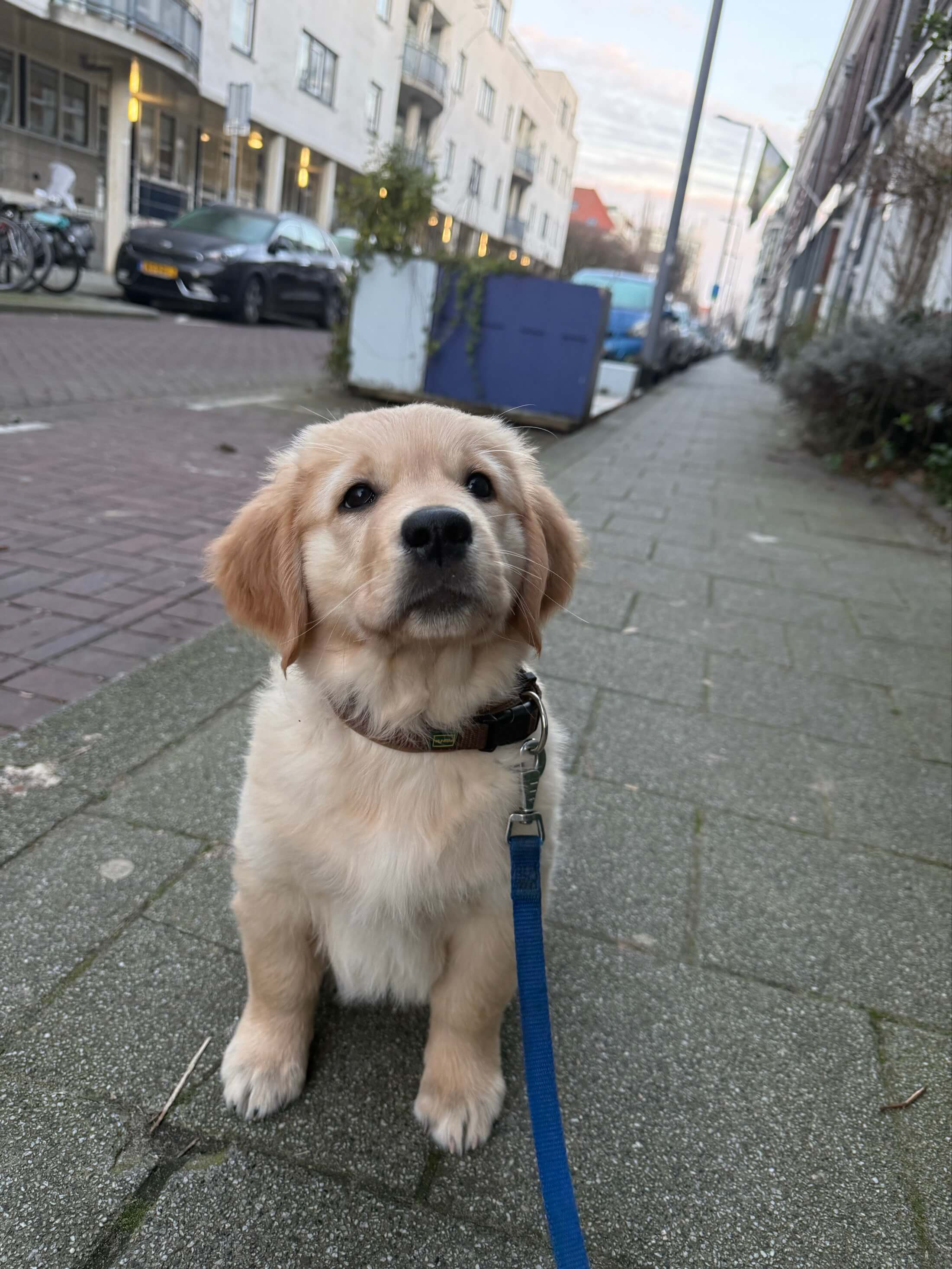
How Long Can a Puppy Hold Their Bladder? Complete Chart by Age
Quick answer: A general rule is your puppy can hold their bladder for roughly their age in months plus one hour. So a 2-month-old puppy: about 3 hours max. But that’s the maximum — during the day with food, water, and excitement, expect much less.
The Rule I Wish Someone Had Told Me on Day 1
When I brought Ollie home — an 8-week-old Golden Retriever — I genuinely thought puppies could hold their bladder for “a while.” Like, a couple of hours at least. How hard could it be?
The answer arrived in the form of four puddles in five hours.
Turns out, puppy bladder capacity is much smaller than most new owners expect. And the generic “age + 1 rule” you find everywhere online? It’s a maximum ceiling, not an everyday reality. During the day, with water, food, play, and the excitement of being alive, Ollie needed to go every 30-60 minutes in those first days.
Here’s everything I’ve learned — backed by tracking every single potty break for weeks.
The Puppy Bladder Capacity Chart
| Puppy Age | Max Hold Time (Resting) | Realistic Daytime Interval | Overnight Capacity |
|---|---|---|---|
| 8 weeks (2 months) | ~3 hours | 30-60 minutes | 3-4 hours |
| 10 weeks (2.5 months) | ~3.5 hours | 1-1.5 hours | 4-5 hours |
| 12 weeks (3 months) | ~4 hours | 1.5-2 hours | 5-6 hours |
| 16 weeks (4 months) | ~5 hours | 2-3 hours | 6-7 hours |
| 20 weeks (5 months) | ~6 hours | 3-4 hours | 7-8 hours |
| 24 weeks (6 months) | ~7 hours | 3-4 hours | 8+ hours |
| 9+ months | ~8 hours | 4-6 hours | 8-10 hours |
| Adult (12+ months) | ~8-10 hours | 4-8 hours | 8-10 hours |
Important: These are guidelines, not guarantees. Individual variation is huge. Smaller breeds have smaller bladders. Some puppies are ahead of schedule, others behind. Trust your own puppy’s data over any chart.
The “Age + 1” Rule: Useful but Misleading
You’ll see this everywhere: “A puppy can hold their bladder for their age in months plus one hour.”
- 2 months old → 3 hours
- 3 months old → 4 hours
- 4 months old → 5 hours
- And so on, up to about 8 hours max
This rule is for resting/crate time. It assumes a calm, sleeping, or quietly resting puppy in a crate. It does NOT apply to:
- Active play time
- Post-meal periods (digestion stimulates the bladder)
- Post-nap (bladder fills during sleep)
- Exciting situations (new people, other dogs)
- Puppies who just drank a lot of water
What I Actually Observed
At 8 weeks, Ollie’s real-world intervals looked like this:
- After waking from a nap: 0-2 minutes (needs to go immediately)
- After eating: 10-20 minutes
- During active play: 30-45 minutes
- During calm awake time: 60-90 minutes
- Overnight in crate: 4-5 hours (first week), improving to 6-7 hours by week 3
The “3-hour max” from the age+1 rule? I only ever saw that during sleep. During the day, realistically, we were at 45-90 minutes between potty breaks.
Daytime vs. Nighttime: Two Different Puppies
This was one of the most surprising things I discovered: nighttime bladder capacity is significantly better than daytime.
Why Puppies Hold It Longer at Night
- Metabolic slowdown — Everything slows during sleep, including urine production
- No food or water intake — Nothing going in, less coming out
- No excitement — A calm environment means less bladder pressure
- Den instinct — Puppies instinctively avoid soiling their sleeping area (this is why the crate works so well)
Our Night-by-Night Progression
Here’s what Ollie’s overnight stretches actually looked like:
- Night 1: Slept 23:30 to ~02:00 (2.5 hours), then 02:00 to 05:00 (3 hours)
- Night 2: Slept 00:15 to 04:30 (4 hours 15 minutes!)
- Night 3: Slept 23:25 to 04:30 (5 hours)
- Night 4: Slept 23:00 to 06:45 (nearly 7 hours — breakthrough!)
- Night 5: 23:05 to 06:00 (7 hours)
By the end of the first week, Ollie was sleeping through the night without a potty break. At 8-9 weeks old. I did NOT expect that.
Caveat: This was in a crate, right next to us, in a quiet room. The crate makes a massive difference because of that den instinct. Without a crate, results would likely be very different.
During the Day: A Different Story
While Ollie was crushing overnight holds, daytime looked like this:
- Week 1: Indoor accidents almost always happened within 5 minutes of waking from a nap, or 15-20 minutes after eating. His daytime hold limit was about 60 minutes max during calm time.
- Week 2: Extended to about 90 minutes between breaks during calm periods. Post-nap urgency remained instant.
- Week 3: Some stretches of 2+ hours, but I still took him out every 90 minutes to be safe.
The takeaway: plan your daytime schedule around the shorter interval, not the theoretical max.
Factors That Affect Bladder Capacity
1. Water Intake
Obvious but worth stating: if your puppy just emptied their water bowl, the clock is ticking faster. I started picking up Ollie’s water bowl about 2 hours before bedtime (with a small amount available if he was thirsty). This helped overnight.
During the day: Never restrict water access. Puppies need hydration. Just be aware that 15-30 minutes after a big drink, they’ll need to go.
2. Meal Timing
Eating stimulates the gastrocolic reflex — basically, food going in triggers things to move through the system. Ollie consistently needed to pee (and often poop) within 15-20 minutes of eating.
Practical tip: Feed on a consistent schedule, and plan a potty break 10-15 minutes after every meal. This alone prevents a huge number of accidents.
3. Excitement and Activity
Excited puppies pee. Fact of life. When visitors came, when Ollie met other dogs, when play got really intense — the bladder hold time basically halved.
My data showed that days with visitors or disruptions (like the vet visit on Day 5) had significantly more indoor accidents. The excitement literally overrides their developing bladder control.
4. Temperature
I noticed Ollie drank more water on warmer days (or after being in a warm room), which shortened intervals. Cold weather — we had snow in the first week — seemed to slightly reduce water intake but also made outdoor trips shorter and less productive.
5. Individual Variation
Every puppy is different. Some 8-week-old puppies can hold it 2 hours during the day. Others max out at 30 minutes. Your puppy’s breed, size, health, and individual development all matter. That’s why tracking your own puppy’s patterns is so much more useful than following a generic chart.
How to Build Bladder Capacity
You don’t “train” a bladder — it develops with time. But you can support the process:
1. Use the Crate Strategically
The crate leverages your puppy’s instinct to keep their sleeping area clean. This naturally encourages them to hold it. Short crate periods (30-60 minutes at first, building up) help develop bladder control without causing distress.
2. Gradually Extend Intervals
Once your puppy consistently holds it for 1 hour, try waiting 1 hour 15 minutes. Success? Push to 1 hour 30 minutes. Slowly extend. If accidents start again, you went too fast — back up.
3. Reward Outdoor Success
Every outdoor pee gets a treat and praise. You’re building an association: holding it → going outside → reward. Over time, the puppy starts wanting to hold it for the outdoor payoff.
4. Keep a Consistent Schedule
Regular meal times create regular potty times. Consistent wake-up times create predictable morning routines. Consistency helps both the puppy’s biology and your ability to anticipate needs.
When to Worry
Normal:
- Accidents during excitement
- Regression after schedule changes
- Occasional overnight accident before 12 weeks
- Peeing more frequently after drinking lots of water
- Some days worse than others
Talk to Your Vet if:
- Sudden increase in accidents after weeks of improvement
- Straining to pee or crying while peeing
- Blood in urine
- Drinking excessively
- Can’t hold it for more than 30 minutes at 4+ months
- Peeing very frequently (every 10-15 minutes) during awake time
Urinary tract infections are common in puppies and can mimic potty training regression. When in doubt, check with your vet.
How Tracking Helps
Here’s what I learned the hard way: you think you’ll remember your puppy’s potty patterns, but you won’t. At 4 AM, you’re not building mental models — you’re surviving.
Tracking revealed things I never would have noticed:
- Ollie’s specific meal-to-pee interval (18 minutes on average)
- That evening accidents were 3x more common than morning ones
- That his overnight capacity improved by almost an hour every 2-3 days
- That “vet day” and “visitor day” accidents weren’t regression — they were predictable
This data-driven approach is actually what led me to build Otis. I wanted an easy way to log potty breaks and have the app surface the patterns — your puppy’s personal bladder timeline, not a generic chart. Because every puppy is different, and your puppy’s data is worth more than any rule of thumb.
Key Takeaways
- The “age + 1 hour” rule is a maximum, not a working interval — plan for much shorter during the day
- Nighttime capacity develops faster than daytime, thanks to sleep, crates, and the den instinct
- Post-nap and post-meal are the highest-risk times — always go outside immediately
- Excitement shortens hold time — plan for more breaks on busy days
- Individual variation is huge — track your own puppy’s patterns
- Progress isn’t linear — expect some bad days mixed in with the good
- Bladder capacity grows naturally with age — you can’t rush it, but you can support it with consistent routine
FAQ
Can I train my puppy to hold their bladder longer?
Not directly — bladder capacity grows with physical development. But you can support it with crate training, consistent schedules, and gradually extending intervals. Think of it like a muscle that strengthens with time, not exercise.
Should I wake my puppy up at night for potty breaks?
For the first 1-2 weeks with an 8-week-old, yes — set an alarm for one middle-of-night break. But many puppies surprise you: Ollie went from needing a 4 AM break on Night 1 to sleeping 7 hours straight by Night 5. Let your puppy’s behavior guide you. If they’re sleeping peacefully, let them sleep.
My puppy pees right after coming inside. Why?
This is incredibly common. Your puppy was distracted by all the outdoor smells, sights, and sounds — and forgot to pee. Then they come back to the calm indoor environment and the bladder says “NOW.” Solution: stay outside longer (5+ minutes), and try the “crate reset” method — a brief crate session after a failed outdoor trip, then try again.
Is it bad to restrict water to help with bladder control?
During the day: never restrict water. Your puppy needs proper hydration. At night: it’s fine to pick up the water bowl 2 hours before bedtime, as long as they had adequate water during the day. Always offer water after exercise or play.
How long until my puppy can hold it all day while I’m at work?
Most puppies can’t hold it for a full 8-hour workday until they’re 6-9 months old. Before that, you’ll need a midday break — either come home, hire a dog walker, or arrange for someone to let them out. Never leave a young puppy crated for longer than their age-appropriate hold time.
Jaap tracks puppy data with an enthusiasm that concerns his friends. He’s building Otis, a puppy tracking app, because he believes every puppy parent deserves data-driven peace of mind — without the spreadsheets.