
Puppy Sleep Schedule: How Much Sleep Does Your Puppy Need?
Complete guide to puppy sleep patterns by age, with real tracking data. Why your puppy needs 18-20 hours of sleep and how to make it happen.
Jaap Stronks
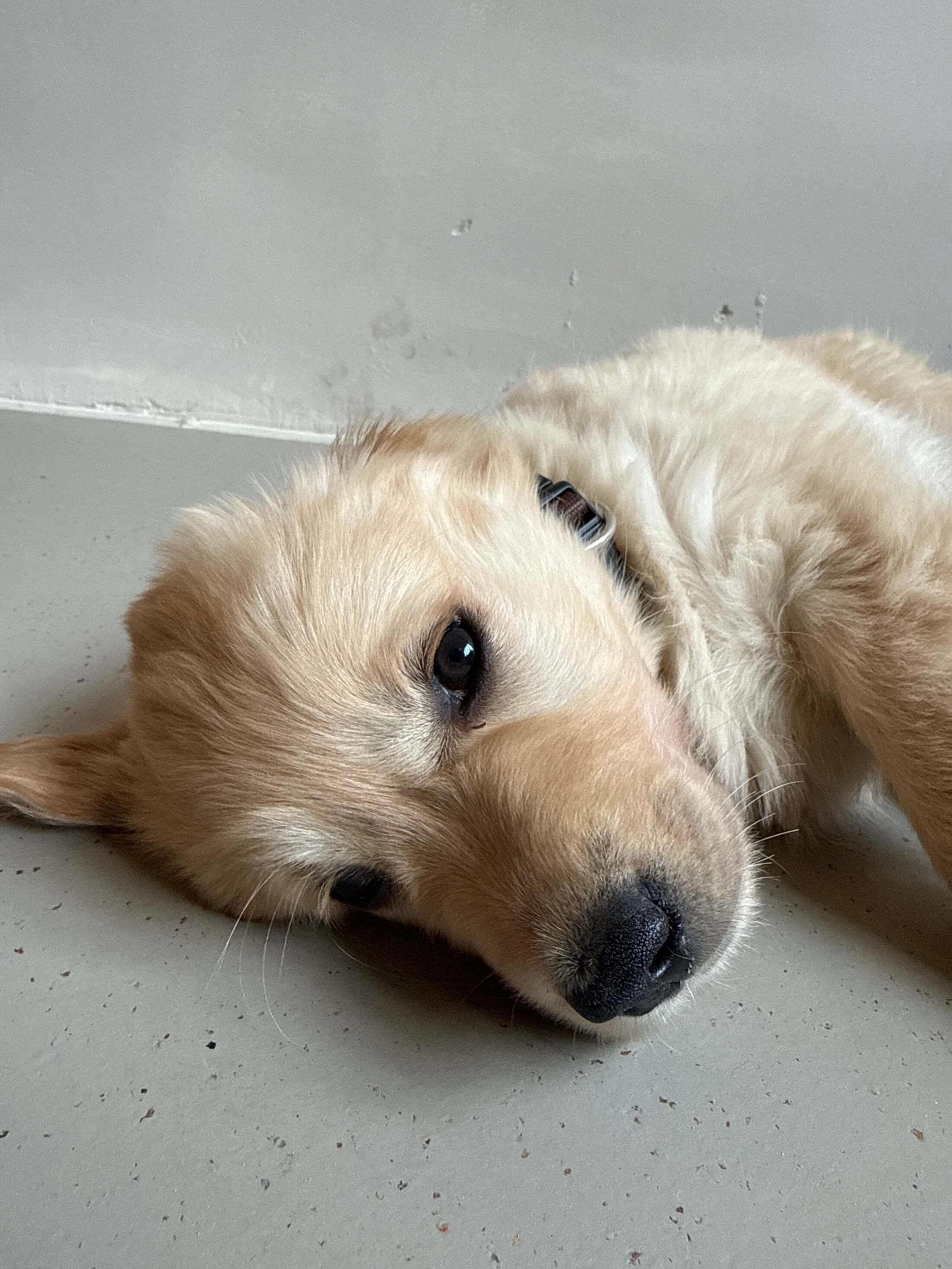
Puppy Sleep Schedule: How Much Sleep Does Your Puppy Need?
Quick answer: An 8-week-old puppy needs 18-20 hours of sleep per day. That sounds like a lot until you realize it comes in 30-90 minute chunks scattered throughout the day, with bursts of chaotic energy in between. By 6 months, they’ll sleep about 14-16 hours. By a year, they’ll settle into the adult pattern of 12-14 hours.
The Sleepiest Creature I’ve Ever Met
Before I got Ollie — my Golden Retriever puppy — I assumed puppies were just… energetic. Running around, playing, learning tricks. The Instagram version of puppyhood: all action, all cute.
Nobody told me that puppies are basically narcoleptic.
In Ollie’s first week home, he slept roughly 18-19 hours per day. He’d have a 30-minute burst of energy — eating, playing, peeing on things — and then collapse. Mid-play. Mid-chew. Once, mid-walk (he just sat down on the sidewalk and closed his eyes).
The thing is: that’s not just normal. It’s essential. Puppy sleep is when the brain processes new experiences, muscles grow, and the immune system does its thing. Those manic 30-minute awake windows? That’s all their little systems can handle before needing to reboot.
Here’s everything I’ve learned about puppy sleep — including why “my puppy won’t nap” usually means “my puppy is overtired.”
How Much Sleep Do Puppies Need? (By Age)
| Age | Total Sleep Per Day | Typical Nap Length | Awake Windows |
|---|---|---|---|
| 8-10 weeks | 18-20 hours | 30-90 minutes | 30-60 minutes |
| 10-12 weeks | 18-20 hours | 45-120 minutes | 45-75 minutes |
| 3-4 months | 16-18 hours | 1-2 hours | 1-1.5 hours |
| 4-6 months | 14-16 hours | 1-2 hours | 1.5-2.5 hours |
| 6-9 months | 14-16 hours | 1-2 hours | 2-3 hours |
| 9-12 months | 12-14 hours | 1-2 hours | 3-4 hours |
| Adult (1+ year) | 12-14 hours | Variable | Variable |
Key insight: Those “awake windows” are much shorter than most people expect. An 8-week-old puppy who’s been awake for 60 minutes is likely already overtired.
What Ollie’s Sleep Actually Looked Like
I tracked Ollie’s sleep from Day 1 (yes, I’m that person). Here’s what the data showed.
Week 1 (8 Weeks Old)
A typical day had 6-8 nap cycles:
- 6:00 AM — Wake up
- 6:45 AM — Nap after breakfast + potty (slept ~45 min)
- 8:00 AM — Awake for walk + play (~40 min)
- 8:45 AM — Nap (~45-60 min)
- 10:00 AM — Awake for potty + play (~30-45 min)
- 10:45 AM — Nap (~60-90 min)
- 12:15 PM — Awake for lunch + potty + play (~45 min)
- 1:00 PM — Nap (this one could go 90 min+)
- 2:30 PM — Awake for walk + potty (~40 min)
- 3:15 PM — Nap (~60 min)
- 4:15 PM — Awake for meal + play (~40 min)
- 5:00 PM — Nap (~45-60 min)
- 6:00 PM — Awake, evening walk, last meal
- 7:30 PM — Nap (~45 min)
- 8:15 PM — Brief awake period
- 9:00 PM — Nap/settle
- 10:30 PM — Last potty break → bed for the night
That’s roughly 18-19 hours of sleep. Only 5-6 hours of actual awake time, broken into tiny chunks.
The First Few Nights
Overnight sleep improved remarkably fast:
- Night 1: Crate at 11:30 PM, fussed until ~2 AM (with periodic soothing), then slept until 5 AM. About 3 hours of actual sleep for the puppy (and less for me).
- Night 2: Crate at 12:15 AM, settled within 15 min, slept until 4:30 AM. A 4-hour stretch!
- Night 3: Slept 11:25 PM to 4:30 AM. Five hours.
- Night 4: Slept 11:00 PM to 6:45 AM. Nearly 8 hours. I woke up in a panic because I hadn’t heard him — turns out he was just sleeping peacefully.
- Night 5: 11:05 PM to 6:00 AM. Seven hours. The new normal.
By the end of Week 1, overnight sleep was essentially solved. The crate was the hero — that den instinct meant Ollie naturally settled and held his bladder overnight.
Week 2-3 (9-10 Weeks)
Naps got slightly longer (60-120 min), awake windows stretched to 45-75 minutes. The total sleep was still around 18 hours, but the pattern was less chaotic. Fewer naps, but longer ones.
The big change: he started putting himself to sleep. In Week 1, I had to guide him to the crate. By Week 2, he’d walk over and lie down in it on his own after a play session. That’s when you know the routine is working.
The Overtired Puppy: The Problem Nobody Expects
Here’s the most counterintuitive thing about puppy sleep: a puppy who won’t settle is usually a puppy who needs MORE sleep, not less.
Signs Your Puppy Is Overtired
- Biting and nipping increases — not playful mouthing, but frantic chomping
- Zoomies that won’t stop — running laps with a manic energy
- Can’t focus — training that worked yesterday suddenly fails
- Whining or barking for no apparent reason
- Won’t settle even when clearly exhausted — lies down, pops up, lies down, pops up
- Biting at everything — furniture, your hands, the air itself
I saw this pattern in Ollie almost daily, especially in the evenings. After tracking it, the correlation was clear: his worst “naughty” behavior always came after being awake too long. Not after too little exercise — after too little sleep.
The Overtired Spiral
It works like this:
- Puppy is tired but keeps getting stimulated
- Puppy gets wired (adrenaline kicks in)
- Puppy looks MORE energetic, so you think they need more play
- You play more, making them more overtired
- Puppy becomes an unhinged land shark
- You’re frustrated, puppy is frustrated, everyone is frustrated
The fix: Enforced naps. When Ollie had been awake for 45-60 minutes, regardless of how energetic he seemed, he went in the crate for a nap. Sometimes he protested for 2-3 minutes. Then he’d sleep for an hour. Every. Time.
Enforced naps were the single most impactful thing I did in the first few weeks. More important than potty training strategy. More important than socialization. A well-rested puppy is a trainable, manageable, happy puppy. An overtired puppy is chaos incarnate.
The Crate: Your Puppy’s Sleep Superpower
I’ll be honest: I was ambivalent about crate training. It felt like putting my puppy in a cage. But within 48 hours, I was a full convert.
Why the Crate Works for Sleep
- Den instinct — Dogs naturally seek enclosed, cozy spaces for rest
- Reduces stimulation — No sights, sounds, or smells to keep them alert
- Boundaries — A clear signal that it’s sleep time
- Safety — A sleeping puppy in a crate isn’t chewing cables or eating socks
- Potty training — They won’t soil their sleeping space, so they learn to hold it
Crate Training Tips That Actually Worked
- Location matters — We kept the crate in the living room during the day (where the action was, so he didn’t feel isolated) and moved it beside the couch at night
- Make it cozy — A blanket over the top (partial cover, keep ventilation), a worn t-shirt inside for scent
- Don’t force it — Let them explore the crate with the door open first. Treats inside. Meals inside.
- Crying protocol — Some fussing is normal. 2-3 minutes of whimpering is okay to ignore. Extended distressed crying means something’s wrong (potty need, usually)
- Never use the crate as punishment — It should be the happy sleep cave, not the naughty jail
Ollie’s Crate Journey
- Day 1: Cried for 2 hours intermittently. Needed soothing through the bars.
- Day 2: Fussed for 15 minutes, then settled.
- Day 3: Walked in on his own for naps. Fussed briefly at night.
- Day 4 onwards: Went to the crate voluntarily when tired. Zero drama at night.
Four days. That’s all it took for the crate to become his favorite spot. Worth every minute of Day 1 crying.
Creating a Puppy Sleep Schedule
The Formula
For an 8-12 week old puppy:
- Awake time: 30-60 minutes max
- Activities during awake time: potty, eat, play, train (short!)
- Nap time: 1-2 hours (in crate, ideally)
- Repeat 6-8 times per day
- Overnight: 7-10 hours (with possible mid-night potty break in first week)
Tips for Establishing the Schedule
Watch the clock, not the puppy. This sounds backwards, but hear me out. A puppy who’s been awake 50 minutes might look perfectly fine — energetic, playful, engaged. But they’re 10 minutes from overtired. Don’t wait for tired signals (because by then you’re already in overtired territory). Set a timer.
Consistency builds the habit. Same wake time, same meal times, same nap times. Within a week, their internal clock adapts. Ollie started yawning and walking to the crate at predictable times because his body knew the schedule.
Post-activity nap. After any significant activity — walk, training, play, socialization — enforce a nap. Even if they seem fine. Especially if they seem fine.
Evening wind-down. Start dimming stimulation from 7-8 PM. Quieter play, no visitors, calming environment. This helps the transition to overnight sleep.
Common Sleep Questions, Honestly Answered
”My puppy sleeps all day — is that normal?”
If your puppy is 8-12 weeks old and sleeping 18-20 hours a day: completely normal. They’re growing at an insane rate. Their brain is processing hundreds of new experiences daily. Sleep is when the magic happens.
Worry if they’re sleeping significantly MORE than 20 hours, seem lethargic when awake, or won’t eat.
”My puppy won’t nap during the day”
They’re probably overtired. It’s the paradox: too tired to sleep. Try:
- Reduce stimulation (quiet room, crate)
- Enforce shorter awake windows (30-40 min instead of 60)
- Check for discomfort (hunger, full bladder, temperature)
- A brief calm chew (frozen Kong) in the crate can help them settle
”Should I wake my puppy from naps?”
Generally, let sleeping puppies sleep. The exceptions:
- If it’s been 2+ hours and you need to maintain the potty schedule
- If letting them sleep now will mess up bedtime
- If they need to eat (maintain regular meal times)
I let Ollie sleep through naps naturally in Week 1. By Week 2, I sometimes woke him if a nap went past 2 hours, just to keep the daytime schedule on track.
”My puppy sleeps all day and is crazy at night”
Classic case of the zoomies happening at the wrong time. Your puppy’s schedule might be shifted. Try:
- More activity in the late afternoon (walk, play)
- Enforce an early evening nap (5-6 PM) so they’re rested but not wired
- Push bedtime slightly later
- Make sure they’ve had enough mental stimulation during the day (training, new experiences)
How Tracking Sleep Patterns Helps
I became slightly obsessed with tracking Ollie’s sleep. But it paid off enormously:
- I discovered his optimal awake window was about 45 minutes (not the 60 I assumed)
- I could see that his “witching hour” was 7-8 PM, triggered by being awake too long after the afternoon nap
- I confirmed his overnight sleep was improving even when daytime felt chaotic
- I identified that nap quality was better in the crate vs. on the floor (longer, less interruption)
This kind of pattern recognition is exactly what I’m building into Otis. The app tracks sleep (and everything else) and surfaces your puppy’s actual patterns — optimal nap times, awake windows, and the trends over weeks. Because knowing your puppy’s specific sleep needs takes the guesswork out of the hardest part of puppyhood.
Key Takeaways
- 8-week-old puppies need 18-20 hours of sleep per day — that’s normal and healthy
- Awake windows are SHORT: 30-60 minutes at 8 weeks, gradually extending with age
- Overtired puppies look hyper, not sleepy — if your puppy is going nuts, they probably need a nap
- Enforced naps are essential — don’t wait for your puppy to settle themselves in the first few weeks
- The crate is your best sleep tool — most puppies accept it within 3-5 days
- Overnight sleep improves fast — expect full nights (7+ hours) within the first 1-2 weeks
- Consistency matters more than perfection — same schedule every day builds the habit
- Track sleep patterns to find your puppy’s specific rhythm — it’s more useful than any generic chart
FAQ
How many naps does a puppy need per day?
An 8-week-old puppy typically needs 6-8 naps per day. This decreases to 3-4 naps by 4-6 months, and 1-2 naps by 9-12 months. By adulthood, most dogs take 1-2 daytime naps plus their overnight sleep.
When do puppies start sleeping through the night?
Many puppies can sleep 6-7 hours overnight by 9-10 weeks old, especially with crate training. Ollie was sleeping 7+ hours by his fourth night home at 8 weeks. This varies by individual — some puppies take 2-3 weeks to get there. Limiting water 2 hours before bed and a last potty break right before crate time helps.
Should my puppy nap in the crate or anywhere?
For the first few weeks, the crate is ideal — it provides the best quality sleep with fewer interruptions. Once your puppy has a solid sleep routine (usually by 3-4 months), you can allow naps on dog beds, the couch, or wherever they’re comfortable. The crate remains useful for enforced naps when they’re overtired.
My puppy twitches and whimpers in their sleep. Is that normal?
Completely normal! Puppies have very active REM sleep. You’ll see twitching paws, facial movements, small barks, and whimpering. It’s likely dreaming, and it’s actually a sign of healthy brain development. Don’t wake them — let them dream about chasing squirrels (or whatever Golden Retrievers dream about — probably cheese).
How do I know if my puppy is sleeping too much or too little?
Too much: If a puppy over 12 weeks is sleeping more than 20 hours/day AND seems lethargic when awake, check with your vet. Growth spurts temporarily increase sleep needs, which is normal. Too little: If your puppy is clearly tired but can’t settle, seems irritable, or has increasing behavior problems, they’re likely not getting enough sleep. Increase enforced nap time and shorten awake windows.
Jaap is a sleep-deprived puppy parent and the creator of Otis, a puppy tracking app that helps you understand your puppy’s sleep patterns — because “they sleep a lot” doesn’t really cut it when you’re trying to figure out why your puppy just ate a couch cushion at 8 PM.